Rotation is Risk Management
Intro
Fifth spring is set to end this next week and we’ll be back to winter here. The +20C weather has been nice, but a little strange as well. What’s it been like for you? Send me a message on my Contact page.
For this month, my article focuses on rotation. It’s hard to quantify but the effects of it are real. With weather, markets, and geopolitical risks all very real concerns this year a good rotation adds stability. No one crop will carry the farm, but, just as importantly, no one crop will put the farm at risk.
Bio
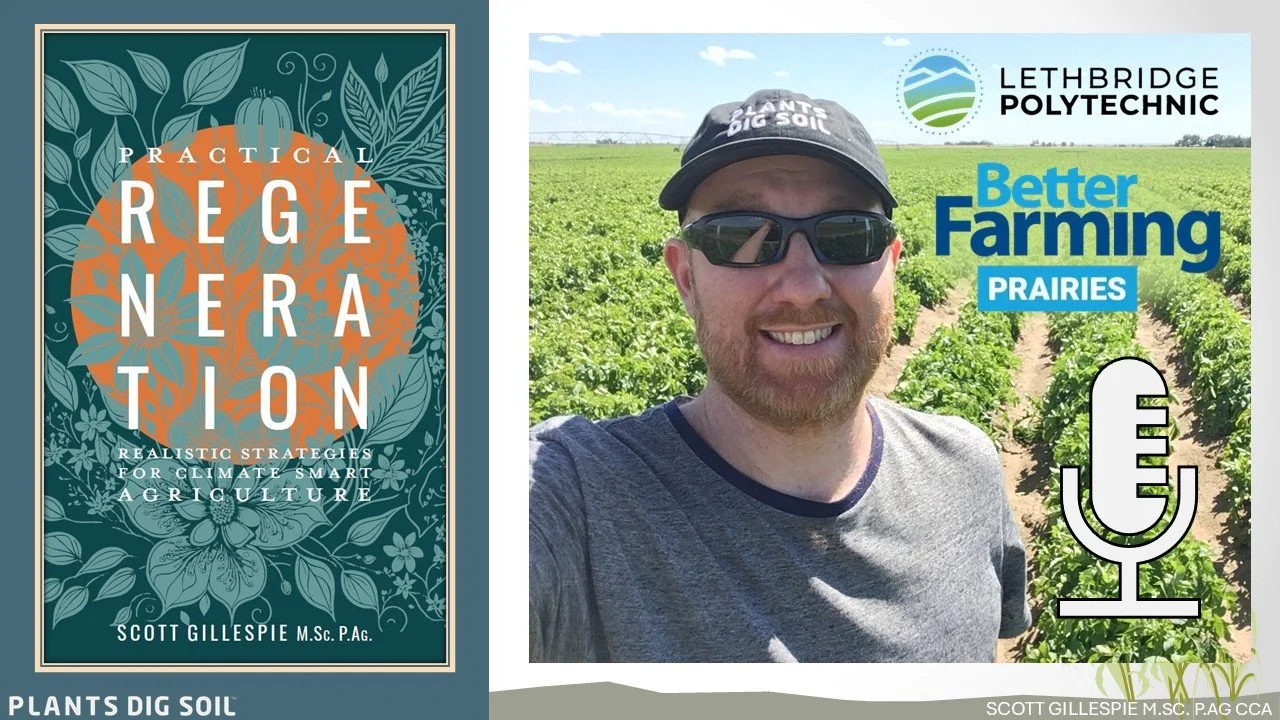
In case you’re new here, let me introduce myself. My name is Scott Gillespie and I’m an Alberta-based author, podcaster, and independent agronomy consultant.
I have nearly two decades of experience in dryland and irrigated specialty crop systems, working across organic, conventional, and regenerative farms. Through my consulting, my podcast (Plants Dig Soil), and my book (Practical Regeneration: Realistic Strategies for Climate-Smart Agriculture) the basis of my advice is simple:
Science-backed practices that promote environmental stewardship and farm profitability.
Same content. Different Ways to consume.
Rotation is Risk Management
We tend to evaluate crops one year at a time. What’s canola priced at? Are peas going to be in high demand? What’s the basis? What pencils this spring?
But farms don’t operate one year at a time. They operate across cycles — weather cycles, disease cycles, market cycles and workload cycles. And rotation is one of the few tools we have that directly spreads risk across all of those at once.
When we tighten rotations to chase the hot crop, we often don’t notice the risk we’re concentrating. Disease pressure builds faster. Soil-borne pathogens don’t get a break. Root systems become less diverse. Residue patterns change. Nitrogen cycling becomes more dependent on inputs rather than biology. Even labour and equipment timing get compressed.
Everything works — until it doesn’t.
Cereals, pulses and oilseeds each bring something different to the system.
Cereals often give us rooting depth, residue cover and workload spread. Pulses bring biological nitrogen, microbial stimulation and diversity — but they also introduce their own disease considerations and management complexity. Oilseeds like canola bring strong gross revenue potential, but they also carry tighter disease intervals and higher economic exposure.
No crop is “good” or “bad” in isolation. The question is: what risk are you taking by how often you grow it?
And that’s really the heart of this discussion. Rotation isn’t about maximizing yield in a single season. It’s about protecting stability over time. It’s about reducing the odds that one bad year — agronomic or economic — does real damage.
A solid four-year rotation won’t always win the top line comparison in a hot commodity year. But it often wins on consistency, especially when weather, input markets and geopolitics are all moving targets.
In this article, I’ll walk through the high-level thinking: how disease builds in shortened rotations, how pulses change nitrogen dynamics, how rooting depth and soil structure factor in, and why stability often beats chasing the top dollar.
For the full article go to:
https://www.betterfarming.com/flippingbook/better-farming-prairie/2026/february/46/index.html
Closing remarks
Thanks for your attention! If something resonated let me know. I love to hear from people. Also, sharing this episode in your social networks, whether a post or to small group of your friends, colleagues, or clients, is very much appreciated. You can also support me by picking up a copy of my book, Practical Regeneration, or reaching out for agronomy support.
All the information can be found on my website:
www.plantsdigsoil.com
Here’s to growing more, believing less, and always digging a little deeper.