Tight soil isn’t a diagnosis
How to separate compaction from chemical soil problems
There’s been a lot going on in the garden and in the field over the past few months, which made it harder to keep this podcast going. I decided to skip June because I didn’t have a new Better Farming Prairies article to share.
They move to a bi-monthly schedule through the summer, which makes sense. Farmers and agronomists usually have less time for reading in July and August than they do in winter.
So although it’s early August, this is really the July podcast, a little late. Better Farming Prairies doesn’t publish again until September, but I have an article from Rural Living in Lethbridge County that fits for well for August.
This break also marks a transition point in my articles. So far this year, I’ve focused mostly on plants: seeds, weeds, rotation, fertilizer and biostimulants. For the rest of the year, I’m diving deeper into the soil.
Over the years, I’ve talked to companies at trade shows offering soil solutions that didn’t quite make sense to me. I knew something didn’t add up, but I didn’t have the technical background to explain why.
This past winter, I heard the same frustration from a representative of a grower organization. That pushed me to dig into it more seriously.
What started as an idea for one or two articles turned into a four-part series. Each article stands on its own, but they build on each other.
This month, I’m starting with the concept of a tight soil.
Water pooling, poor growth and areas that never seem to perform are often described as tight soils. The challenge is that “tight soil” isn’t a diagnosis. It’s a description of a symptom, and that symptom can come from several very different causes.
Scroll down for more details and the link to the full article.
Scott.
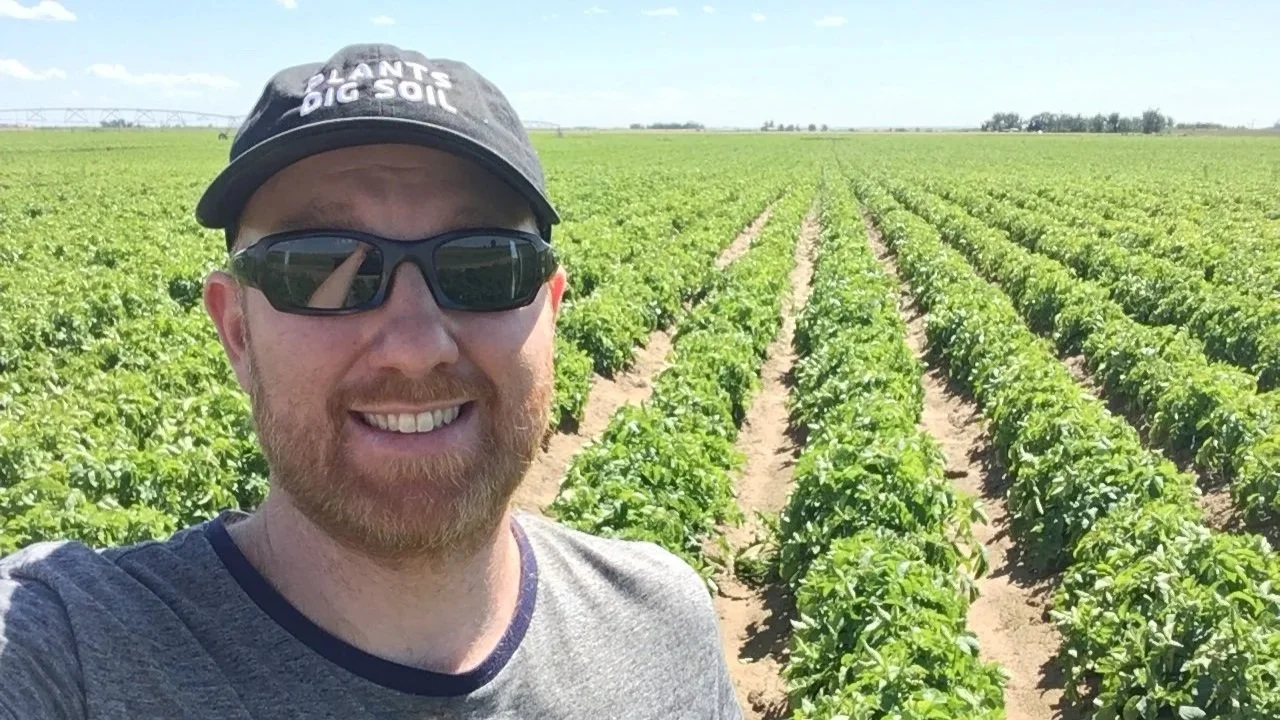
In case you’re new here, let me introduce myself. My name is Scott Gillespie and I’m an Alberta-based author, podcaster, and independent agronomy consultant focusing on practical, science-backed advice. I have nearly two decades of experience in dryland and irrigated specialty crop systems, working across organic, conventional, and regenerative farms.
Same content. Different formats.
If water is sitting on the surface, the first assumption is often compaction. Sometimes that is correct. Heavy equipment, repeated traffic and working soil when it is too wet can all create layers that roots and water struggle to move through.
But that is not the only possibility.
Water may be getting into the soil and then stopping at a restrictive layer below. Poor growth may be caused by salts, sodium, deep compaction or a combination of problems. From the road, those situations can look similar. Below the surface, they are very different.
And if the cause is different, the solution is different.
That is where misdiagnosis becomes expensive. If the problem is physical compaction, then targeted tillage, traffic management and roots may have a role. More on that next month.
If the problem is salinity, the issue is excess salts in the soil water. If the problem is sodicity, sodium is affecting the soil structure itself. If it is solonetzic, the surface may look fairly normal while a dense, sodic layer underneath impedes rooting and water movement.
Those are not the same problem.
A common diagnosis is “alkali.” It gets used for almost any poor-performing patch where salts show up on the surface. But alkali refers to high pH, not simply the presence of salts. A saline patch and a sodic or alkali soil can overlap, but they are not the same thing.
Another example is magnesium. In some circles, magnesium gets blamed for tight soils because it often shows up at high levels in those areas. There can be some truth in the concern, but it is easy to take that too far.
It’s true: magnesium can contribute to a tighter-feeling soil, especially in heavy clay. But it does not disperse soil the way sodium does. When soil structure is truly breaking down, sodium is often the bigger issue.
Excerpt from my article:
A useful way to think about this is a dry-fitted stone wall, like those built across Britain. Think of the classic images of the Scottish lowlands or the Irish countryside. These walls are stacked without mortar, and their strength comes from how well the stones fit together.
A master builder sorts, splits and chips stones so they fit tightly together. The wall is solid and handles pressure well. In the soil, calcium is the master builder.
A wall built without tools may still stand, but it’s less refined. The stones are placed with care, but the builder has to work with what is available. Magnesium works in a similar way. It holds soil particles together, but not as effectively as calcium.
Sodium is very different. It’s like clearing stones from the field and piling them along the edge. There is no fitting or shaping. There is no real wall, and any force will cause the stones to move.
Before reaching for a product, a deep ripper or a simple explanation, it is worth asking a few basic questions.
Where is the problem in the field? Is it in a low spot, a headland, or a repeating landscape pattern? Does water stay on the surface, or does it enter the soil and stop deeper down? How does it compare with a better-performing area nearby?
A shovel can tell you a lot. A soil probe can help. But I’ve become a big fan of the Dutch auger (left and middle pictures at the top) because it lets you pull soil out in layers. You can feel changes in resistance, see differences in moisture and texture, and identify where the soil changes with depth. It is a simple tool, but it makes the soil profile visible in a way that surface observation never can.
A penetrometer (right picture at the top) can also be useful, especially when you are trying to put numbers to a suspected compaction layer. But it has to be used carefully. Soil moisture changes the reading, and dry soil will always be harder. The number matters, but so does the pattern. A sudden jump in resistance followed by a drop can tell you more than one reading by itself.
The full Better Farming Prairies article goes into this in more detail. The goal is to build a practical way of thinking through these fields before jumping to a fix.
Because Better Farming Prairies does not publish in August, I’m going to take a short detour next month before continuing the magazine series.
Next month’s episode will focus on physical compaction, based on an article published by Lethbridge County in the spring: “Using roots to manage compaction: When steel helps — and when it doesn’t.”
That piece looks at where tillage can help, where it falls short and why roots need to follow any mechanical intervention if the benefit is going to last. It also gets into cover crops, perennials and the limits of expecting roots to fix a layer that the cash crop itself cannot penetrate.
In September I’ll pick the Better Farming Prairies series with a look at the categories of chemically tight soils: saline, sodic and solonetzic soils. That article gets into the difference between salts in the soil water and sodium held on the soil, along with the lab tests needed to separate those problems.
In October, I’ll look at what can realistically be done about saline and sodic soils. That one is built around a simple idea: water movement drives remediation. If water cannot move through the soil, salts and sodium cannot be moved out of the root zone.
The final article in November will deal with the tougher cases: saline-sodic and solonetzic soils. These are the situations where fixing one part of the problem can make another part worse, and where expectations need to be realistic.
So the path from here is:
July (right now) starts with diagnosis.
August takes the physical compaction detour.
September gets into definitions and lab tests.
October looks at remediation for saline and sodic soils.
November covers the more complex saline-sodic and solonetzic soils.
By the end, the goal is not to have one magic answer for tight soils. The goal is to know which problem you are actually dealing with, and what kind of response has a realistic chance of working.
To read the complete article use the link below or look for:
Better Farming Prairies, July/August 2026, p.41
Closing remarks
Thanks for your attention! If something resonated let me know. I love to hear from people. Also, sharing this episode in your social networks, whether a post or to small group of your friends, colleagues, or clients, is very much appreciated. You can also support me by picking up a copy of my book, Practical Regeneration, or reaching out for agronomy support.
All the information can be found on my website:
www.plantsdigsoil.com
Here’s to growing more, believing less, and always digging a little deeper.