
Steel to break compaction
Making room for roots
Last month I started a series on tight soils with a simple point: tight soil is not a diagnosis. It is a symptom.
Water pooling, poor growth and shallow rooting can all point to different problems. Some are physical. Some are chemical. From the surface, they can look very similar.
The chemical side is where the rest of my Better Farming Prairies series is headed. Saline, sodic, saline-sodic and solonetzic soils all behave differently, and they need to be diagnosed before choosing a fix.
But before we go there, I want to take a short detour into physical compaction.
This is the version of tight soil most people think of first: heavy equipment, moist soil, repeated passes, wheel tracks, headlands and layers that roots struggle to get through. In that situation, the question is different. It is not about salts or sodium. It is about whether the soil has been physically compressed, and whether it can be opened up again.
That leads to the main question for this month: when does steel help, when do roots help and when are we expecting too much from both?
Tillage may not be popular in some soil health conversations, but there are times when steel can provide real relief. The problem is that relief is usually temporary unless roots follow and rebuild structure. That is where timing, crop choice, moisture and economics all matter.
Scroll down for more details and the link to the full article.
Scott.
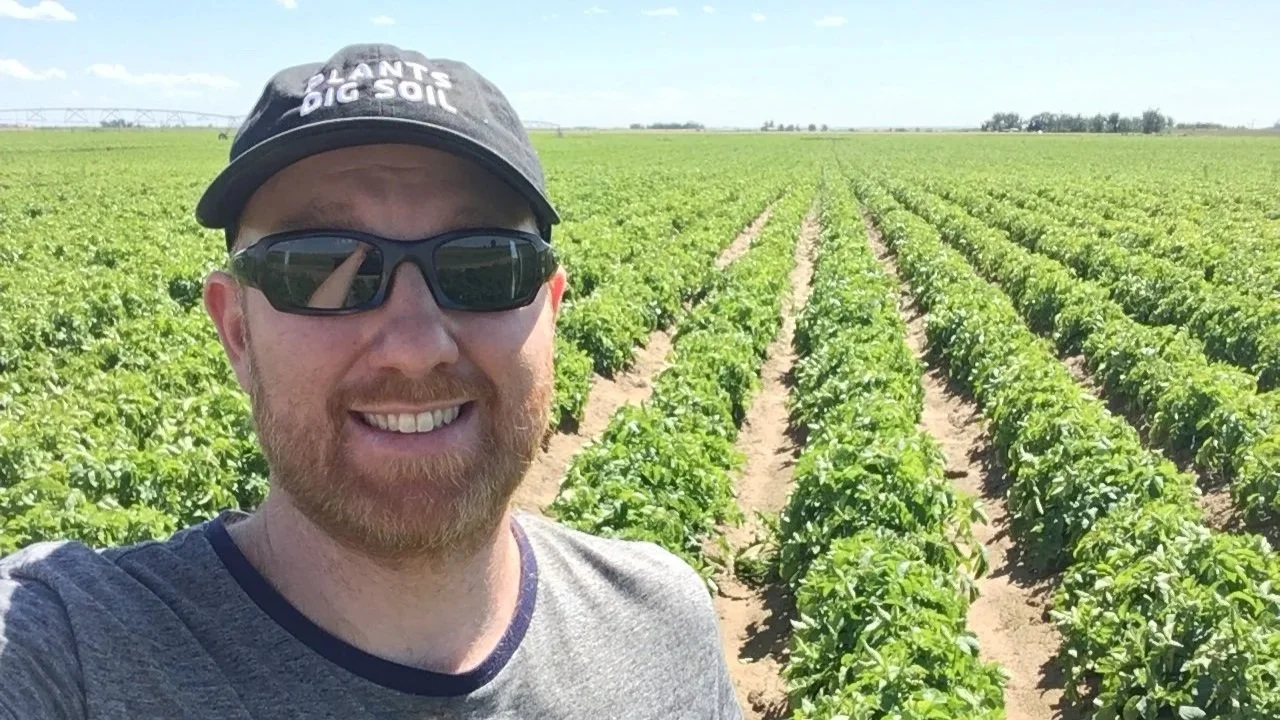
In case you’re new here, let me introduce myself. My name is Scott Gillespie and I’m an Alberta-based author, podcaster, and independent agronomy consultant focusing on practical, science-backed advice. I have nearly two decades of experience in dryland and irrigated specialty crop systems, working across organic, conventional, and regenerative farms.
Same content. Different formats.
If the problem is true physical compaction, tillage can provide real, immediate relief. If the problem is chemical — sodium breaking down soil structure, for example — then tillage may only provide short-term relief, and it may not deal with the real cause.
That is why diagnosis matters.
There is also a tendency to assume cover crops can do the compaction-busting work. Sometimes they can help. But we need realistic expectations.
If a cash crop cannot push roots through a compacted layer, a cover crop probably will not do much better. Cover crops do not have special abilities that allow them to overcome a physical barrier that wheat, barley, oats, canola or mustard cannot penetrate.
In regions with long shoulder seasons and more moisture, cover crops have more opportunity to grow roots after the main crop comes off. That is more common in places like the eastern United States or Ontario.
Here in the Prairies, the window is shorter and moisture is often limited. We also already have some of the best annual rooting crops in our regular rotations. Cereals such as wheat, barley and oats have strong fibrous root systems. Brassicas such as canola and mustard are already doing some of the work that cover crop mixes often get credit for elsewhere.
Excerpt from my article:
Use steel and diesel to do the work that roots cannot do, then get a root in place to scaffold the soil and prevent recompaction.
Roots are not only a physical structure. They actively exude sugars and other compounds that feed nearby microbes. All plants do this – cash crops, cover crops, and weeds.
These microbes create the “glue” that binds soil particles into aggregates. Those aggregates give soil the familiar “coffee grounds” consistency that helps hold structure, improve infiltration, and allow future roots to move through the soil more easily.
To read the complete article - including the best crops to follow a compaction busting event - use the link below or look for:
Rural Living in Lethbridge County, Spring/Summer 2026, p.21
To end off the newsletter I want to draw your attention to something really fascinating in last month’s Better Farming Prairies and a conversation on LinkedIn that helped me better understand magnesium’s role in tight soils.
Do you remember how I started the newsletter saying that they go to a bi-monthly publication schedule in the summer because most people have a hard time keeping up with ag publications then? Well, I was one of those! When I got down to reading it one small research update gave me pause. The headline is:
Crops Select Microbes, Not Soil Type
Soils were collected from six key regions in the UK. Each soil had it’s own unique bacterial communities. When they grew crops on those soils they found that, even though each soil was unique, the crop dictated what communities were expressed.
Sugar beets and oilseed rape (similar to canola) attracted drought tolerant microbes.
Barley selected those that mobilize zinc.
Fava beans (aka faba beans) had less microbes for breaking down organic nitrogen - because it already had the microbes doing the job in it’s nodules
This has huge implications for the world of biologicals. My personal experience is that I have yet to see one that works. I also have not come across third party trials that show that adding microbes to the plant or the soil has any economic impact.
I’d always thought that it was because the soil overwhelms any newcomer to the system. It seems the plant has a role in this too. Here’s the bottom line quote from the researcher:
“A more effective long-term strategy may be to breed crops that are better at recruiting beneficial native soil microbes, rather than relying on introduced strains that often fail to establish.”
Wes Anderson has over a decade of experience in the Prairies but has been in Australia for the past five years. His comment on my LinkedIn post about tight soils last month caught my attention:
“Great topic and a common discussion for me. I happen to work in an area where some areas in fields have more Mg than Ca, and it definitely contributes to the “tight” soil issue. But as you say nothing like Na, which I also see a lot of. How a soil probe goes in tells me a lot but it’s always fascinating to see the soil tests!”
There’s a few interesting things in there.
First of all, the widespread belief in Western Canada that Mg is the problem could come from well meaning people that see the problem in another area and think it’s the same way here.
Second, although Mg is a problem, there is acknowledgement that Na is the much bigger problem.
And finally - lab tests are always needed for diagnosis! You can tell a lot from what you see in the field but you still need the tests to know what you are dealing with!
Closing remarks
Thanks for your attention! If something resonated let me know. I love to hear from people. Also, sharing this episode in your social networks, whether a post or to small group of your friends, colleagues, or clients, is very much appreciated. You can also support me by picking up a copy of my book, Practical Regeneration, or reaching out for agronomy support.
All the information can be found on my website:
www.plantsdigsoil.com
Here’s to growing more, believing less, and always digging a little deeper.